
by Diana
Today I wanted to write about a bit of history that connects Mr. Alexander with our locality.

A few years ago I got on a bus to go to Oxford, and by chance ended up sitting next to a friend who I see only rarely. She asked what I was doing these days, and so obviously I mentioned my work teaching the Alexander Technique.
Normally when you mention the Alexander Technique you get one of two responses. The first typical response is blankness. The person has never heard of Alexander, or his work, and simply has no frame of reference to understand what you’ve said. The second response runs along the lines of ‘Oh, that’s all about posture, isn’t it?’, often said whilst the person stiffens their muscles and pulls themselves into their idea of what ‘good posture’ is. (To briefly deal with this idea: no, it’s not about ‘good posture’, and no I’m not going to teach you anything that involves increasing your unnecessary muscular tension. It’s about bringing your thinking onto a conscious, reasoning plane.)
So I was pleasantly surprised, when talking to this friend, that her eyes lit up with recognition. This was not because she had a particular interest in Alexander’s work, although she had heard of it, but because she’d completed a local history project, and discovered a connection to Alexander’s family.
In ITM, when we give the introductory lecture to new (and returning, and experienced) students, the first question we address is ‘What is the Alexander Technique?’ This quite naturally leads into the question ‘Who was Alexander?’ And the very potted history is this: Alexander’s full name was Frederick Matthias Alexander, often known as FM. He was born in Tasmania in 1869, and he tells us in his third book: “From my early youth I took a delight in poetry and it was one of my chief pleasures to study the plays of Shakespeare, reading them aloud and endeavouring to interpret the characters.”[1] This led to an interest in elocution and recitation, and ultimately FM embarked on a career in professional reciting. Although he was initially successful, it was the problems he developed with his throat and his voice – problems for which he had not found a conventional solution – that led to the investigation in which he discovered the principles from which Alexander’s work is derived.
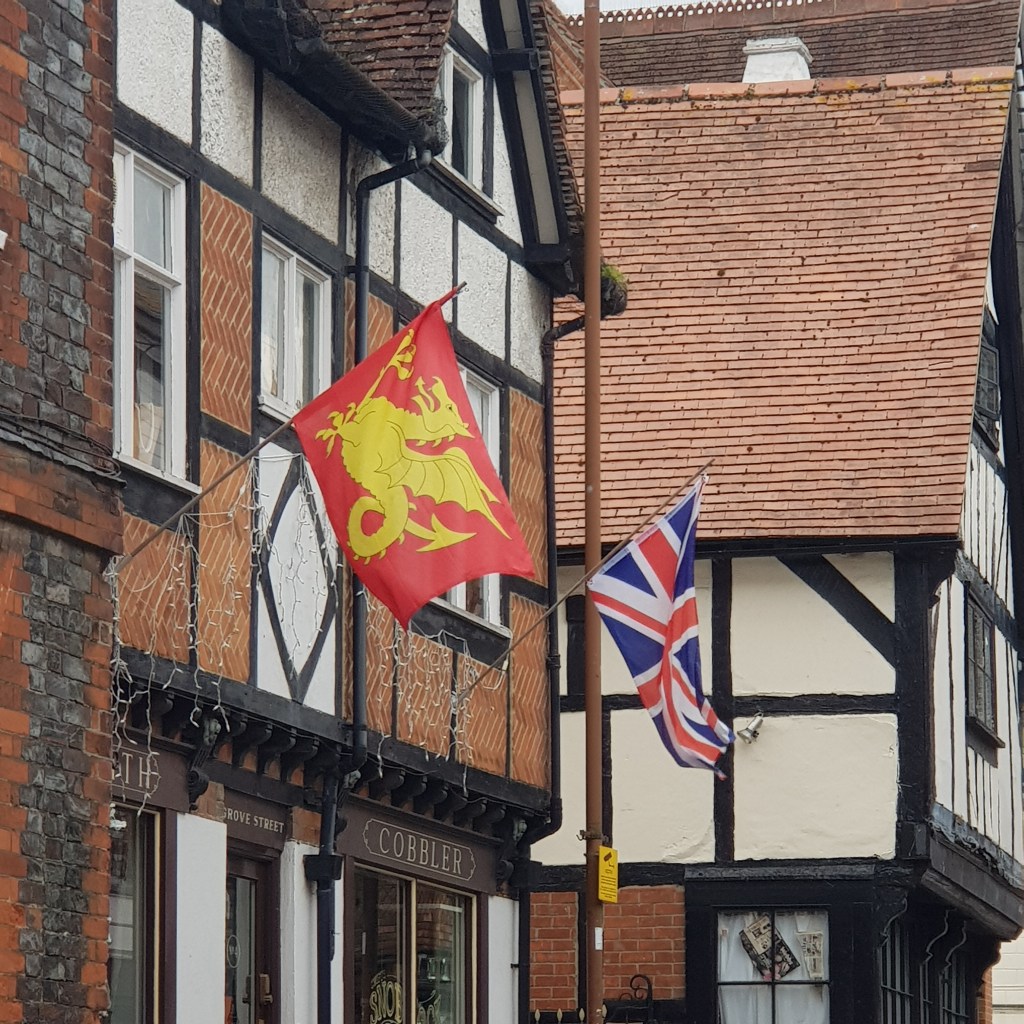
So why do I claim Alexander has Wessex roots? Alexander’s father, John Alexander was also born in Tasmania, however his father, Matthias Alexander was born in Ramsbury, Wiltshire, just 16 miles from where I write this today in Wantage. Alexander’s paternal line is based in Wiltshire back to at least the mid 1500s. Returning to Matthias, the 1820s were a difficult time for agricultural workers in England. The systematic enclosure of common land over the previous 60 years had left landless farmworkers dependent on the richer landowners for their ability to make a living. The widening gulf between landowners and labourers left the labourers in a precarious position, with increasingly insecure and badly-paid work. The landed farmers also took advantage of England’s Poor Laws – which offered assistance to parishioners who were ill or out of work – by paying their workers as little as possible, and relying on the parish to top-up their wages to subsistence levels. Around this time, threshing machines were introduced which could do the work of many men. Bad harvests in 1828 and 1829 meant that by 1830, many people were wondering how to survive the year.
Rioting first broke out in Kent in the summer of 1830, sparked by the destruction of a threshing machine. Over the following weeks and months, these ‘Swing Riots’ spread throughout southern England, and ultimately throughout the whole country.
It was as a result of participating in these riots that Matthias Alexander, and his brother Joseph were convicted in Wiltshire of ‘riotous conduct and felony’, and were transported to Tasmania, having received sentences of seven years each.
In late 1830, the British government fell, and the new government was strongly influenced by the events of the Swing riots. Social, political and agricultural unrest precipitated reform, culminating in the Great Reform Act of 1832, which initiated a remaking of Britain’s political system.
FM’s grandfather, Matthias, died four years before FM was born, but his great uncle Joseph lived until 1878, when FM would have been nine years old. I don’t know enough about Alexander’s family history to know whether he would have known Joseph, or been aware of the circumstances of the brothers’ transportation to Tasmania. Nevertheless, I find it interesting that in the opening chapter of FM’s first book, Man’s Supreme Inheritance,[2] he focuses on the escalating pace of change of civilisation, and the necessity of using our conscious reasoning processes to allow us to adapt not just to our current circumstances, but to any future circumstances that may arise. Given the pace of social, political and technical change between the 1830s, when FM’s ancestors arrived in Tasmania, via 1904 when FM moved to London, to the 1950s when FM died, it’s fair to say that cultivating a mental discipline based on reasoning out the best way to adapt to one’s current circumstances would have stood FM and his students in very good stead. It is certainly a mindset that could help us now, and in the future.
Wessex Today


References
[1] Alexander, F. M. The Use of the Self, Orion 2001, p23 (First published 1932)
[2] Alexander, F. M. Man’s Supreme Inheritance, Mouritz 2002 (First published 1910)
 Wessex Alexander Technique