
by Sandra

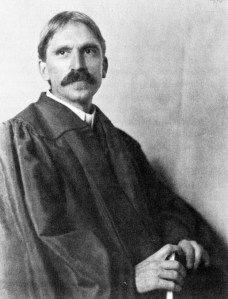
I’m still reading the Introduction by John Dewey to FM Alexander’s third book, The Use of the Self.
I’m still on page 8! I find myself reflecting on the following…
Dewey is talking about how Mr Alexander’s work is grounded in a scientific approach, that today we might call an autoethnographical study. In the chapter called Evolution of a Technique, Dewey says Mr Alexander provides “…a record of long-continued, patient, unlearned experimentation and observation in which every inference is extended, tested, corrected by further more searching experiments…”
Dewey tells us that Mr Alexander moves “… from observations of comparatively coarse, gross, superficial connections of causes and effect to those causal conditions which are fundamental and central in the use which we make of ourselves.”
We don’t know exactly how long Mr Alexander spent in his study of himself as he moved from what he called “ordinary speaking” to reciting. An experiment he made because the problems he’d been having with his voice on stage reciting Shakespeare (among others) were not resolved by consulting medical professionals or specialist educational professionals (e.g. voice coaches).

Alexander the Shakespearean performer, as described in an Australian article from 1902, available here.
When I tell stories (folk tales, myths) I often find myself saying something like… we don’t know how long it took for something to happen, or… time passed, as it does, or… the story doesn’t tell us what happened during x time (probably a year and a day, because it often is in stories!). So I feel quite comfortable not knowing exactly how long Mr Alexander spent in his study. An educated guess based on things he writes in his 4 books might suggest it was about 10 years.
With what Dewey calls “persistence and thoroughness”, Mr Alexander “created what may be called a physiology of the living organism. His observations and experiments have to do with the actual functioning of the body, with the organisms in operation, and in operation under the ordinary conditions of living – rising, sitting, walking, standing, using arms, hands, voice, tools, instruments of all kinds.”
Mr Alexander studied himself, in normal day to day activity. Not, as Dewey says, “dead things under unusual and artificial conditions” as other scientists were doing.
And this leads me to reflect on what the Alexander Technique is, who it is for, and how we can go about our own learning.
From just what I have referred to here, the Alexander Technique can be seen to be a more informed way of using ourselves in every day activities, where we work with (as Dewey said) “…those causal conditions which are fundamental and central in the use which we make of ourselves.”
Mr Alexander suggested that people can learn to do what he does, if they do what he did but nobody wants anything mental (I’ve not used quotation marks as I haven’t checked the source to cite, and may not have repeated it exactly).
Throughout his 4 books Mr Alexander tells us that his work is about what he calls psycho-physical unity. The way he talks about it, together with his comment about people not wanting anything mental, highlight that the starting point to changing how we use ourselves is not to directly try to correct something we see or notice in our physical use. The starting point, those “causal conditions” that Dewey refers to, the psycho- part of that psycho-physical unity, is in our minds. It’s in our thinking.
So who is the Alexander Technique for? Well, if the starting point is in our minds, then, in theory, it’s for everyone! How great is that? Absolutely everyone and anyone. No matter who you are.
Well, with one caveat. Mr Alexander started his enquiry with the question “Is it something I am doing to myself that is creating the problem?” His Doctor agreed it must be so. So, this work is for anyone who is causing themselves a problem. Which is very likely to be all of us. However, where there’s underlying injury, structural issues, or health conditions it’s possible that at least some of the problem someone is experiencing is due to that. What is also possible is that they add to the problem by how they’re using themselves.
So, we’ve covered what the Alexander Technique is and who it’s for. How can we go about our learning?
Mr Alexander said something to the effect of people being able to learn his work through such long study as he gave it himself, or through having lessons from a teacher (same caveat as earlier re source, I will check these at some point and update accordingly). He left us 4 books to help us in our study. There are teachers around the world trained in different approaches to Mr Alexander’s work. I’ve experienced a couple of them, and I chose to train with the Interactive Teaching Method (ITM) which was developed by the late, and greatly missed, Don Weed. He too left us with 4 books. Don would say that, if we could make such long study as Mr Alexander or have lessons, what would happen if we did both? And that is what we do in the ITM.
If you’re prompted by this to seek out an ITM teacher or perhaps a workshop, here are some links:
I teach with colleagues in Oxfordshire, Dorset and Wiltshire (England) – wessexalexandertechnique.uk
We have teachers around the world- see itmalexandertechnique.org
We have workshops in Ireland, Germany and UK – see for example ITM Summer Workshop, details of all are on the ITM website above
Thanks for reading, I do hope you find my occasional, random musings interesting and/or useful!
 Wessex Alexander Technique